
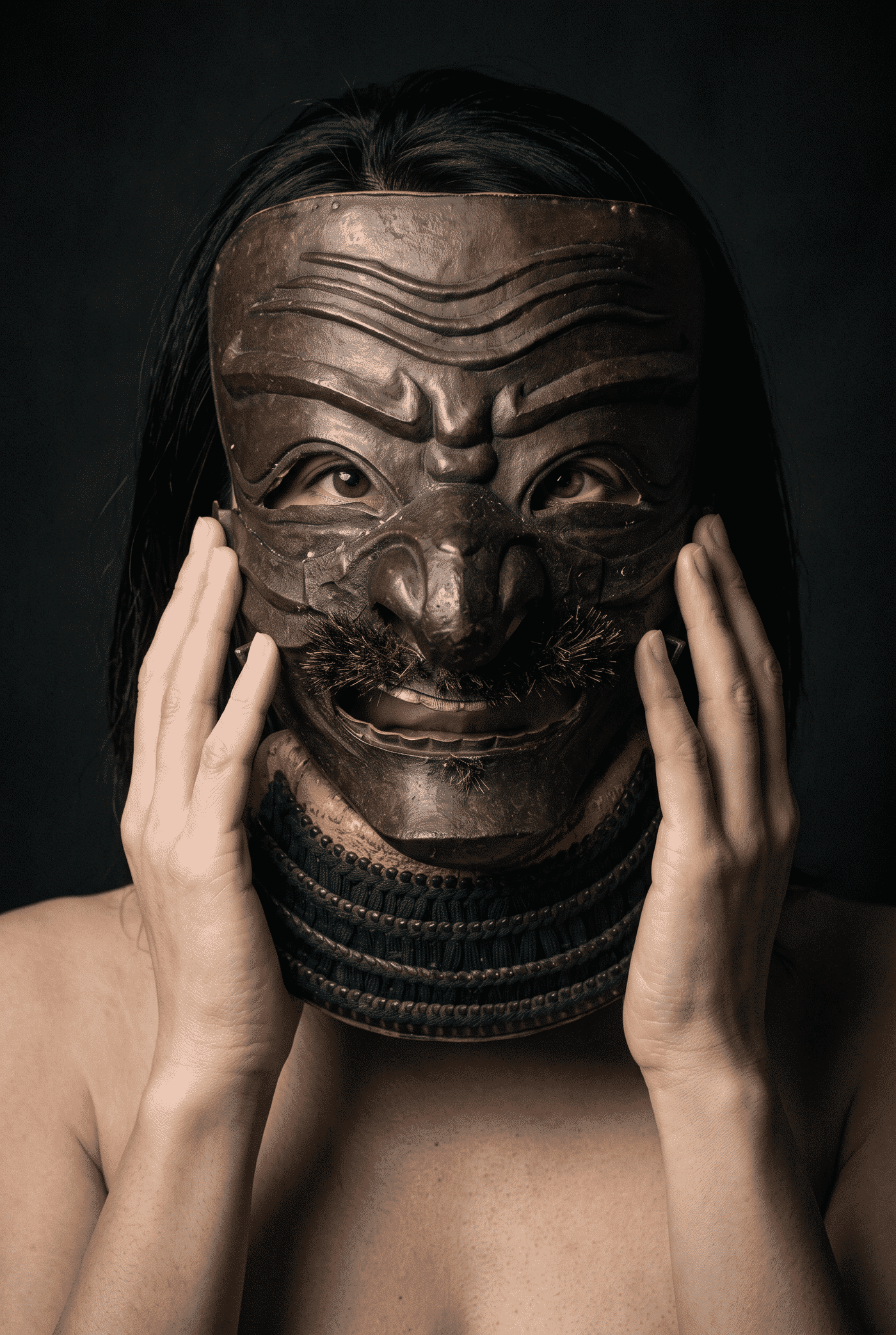
Early Myōchin Sōmen
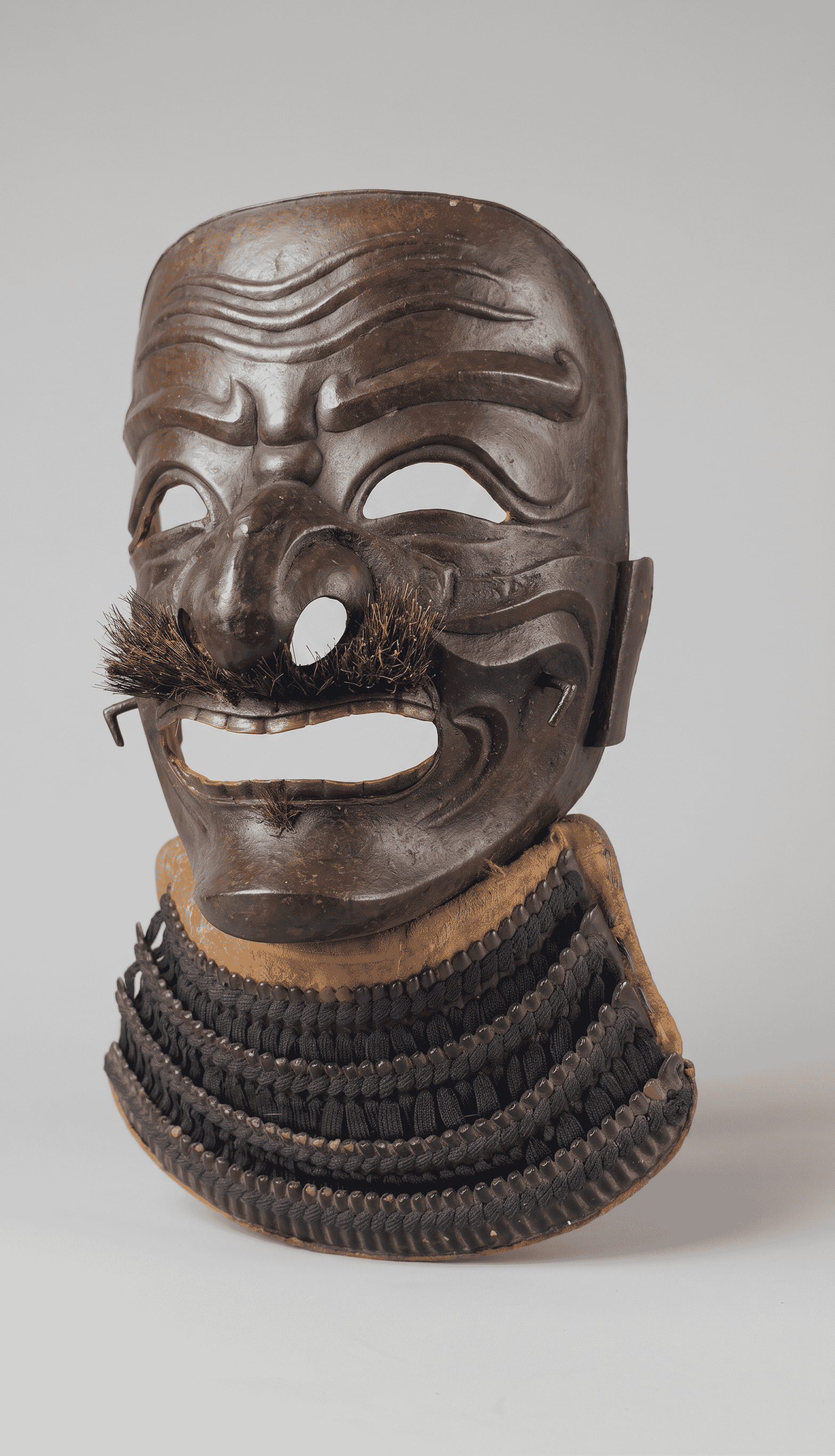
A sculptural full-face defence attributed to Munetoki, preserved with an eighteenth-century kiwame fuda and its later inscribed storage box.
1532–1555
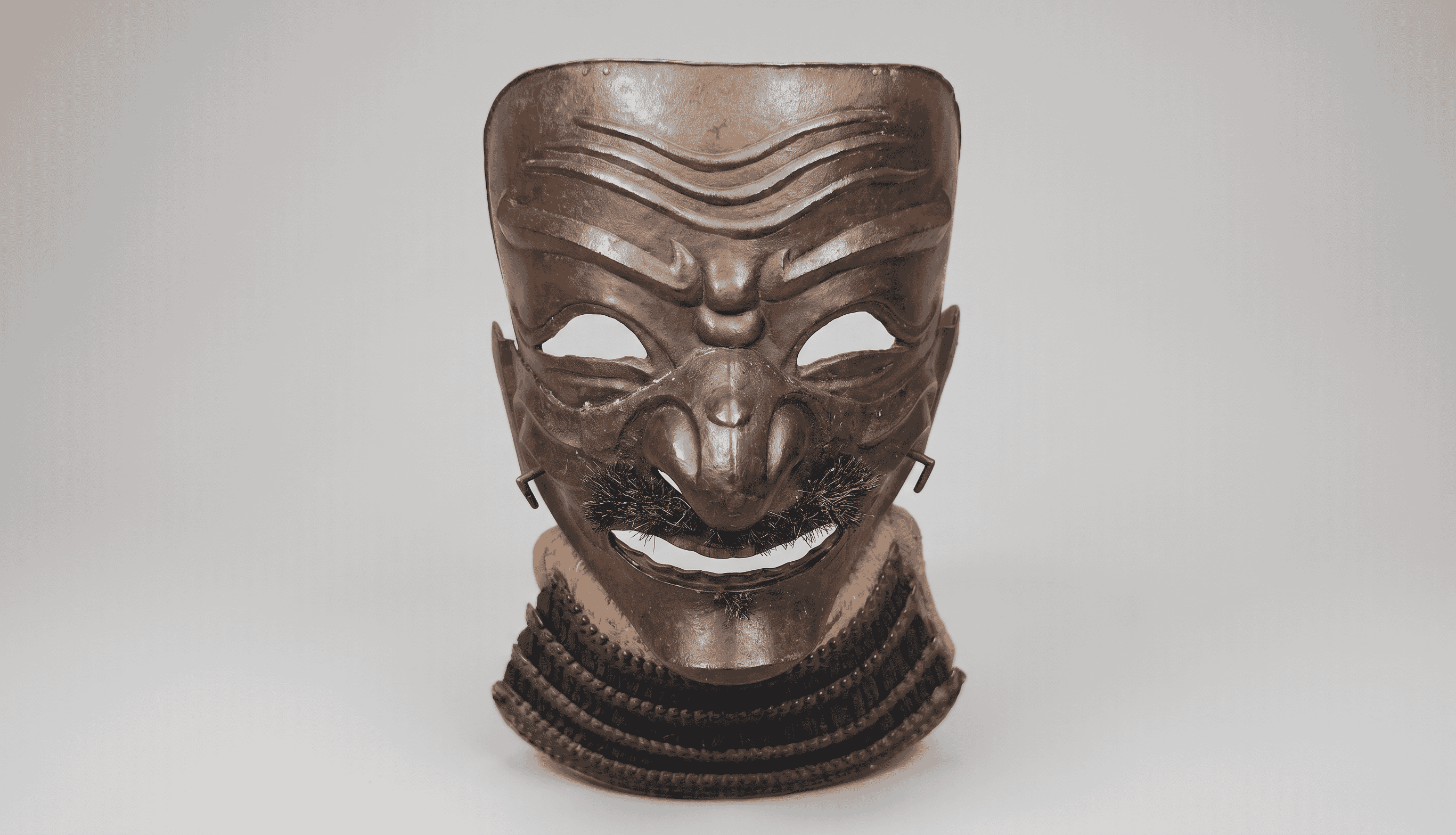
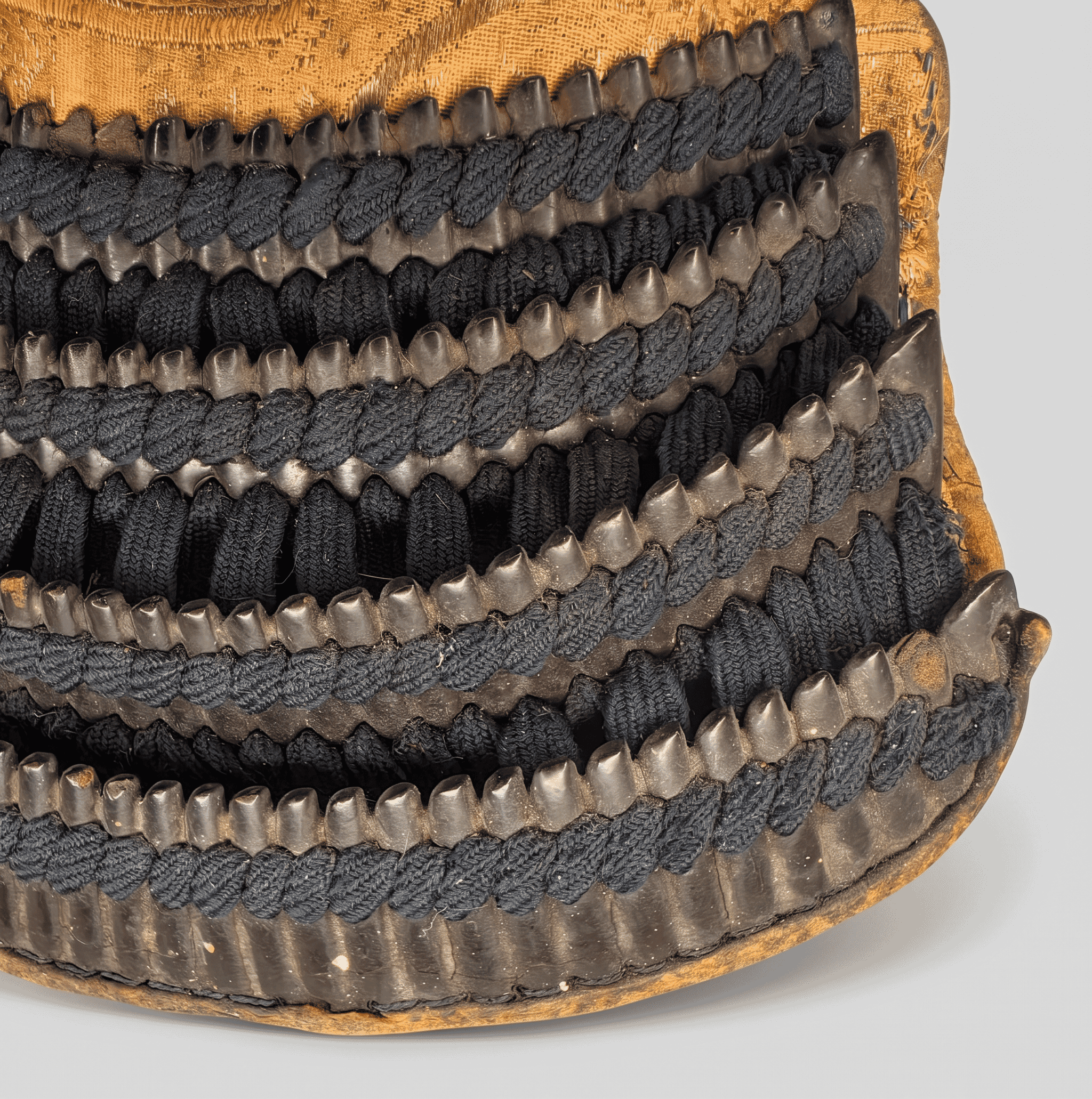
With applied moustache and laced yodarekake
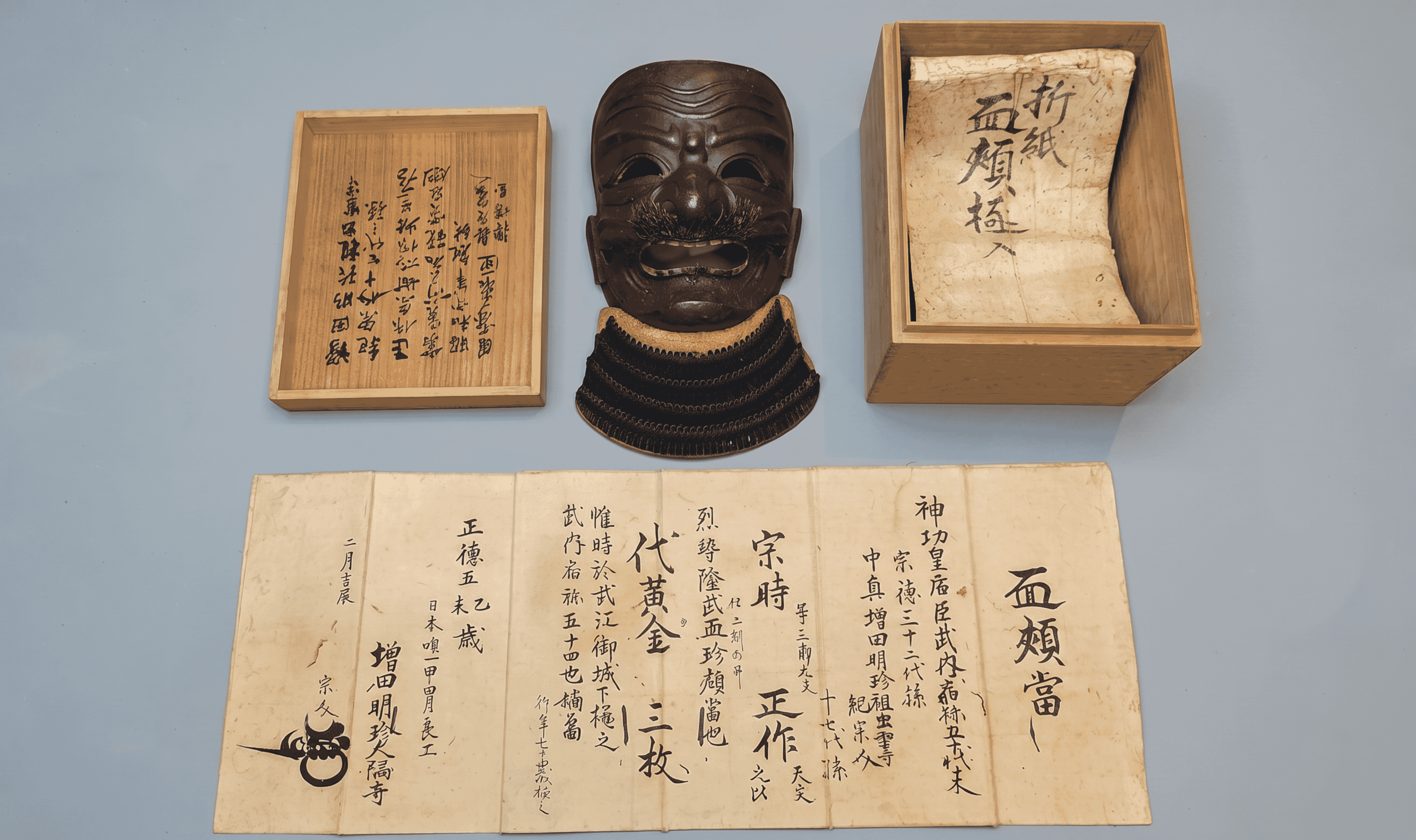
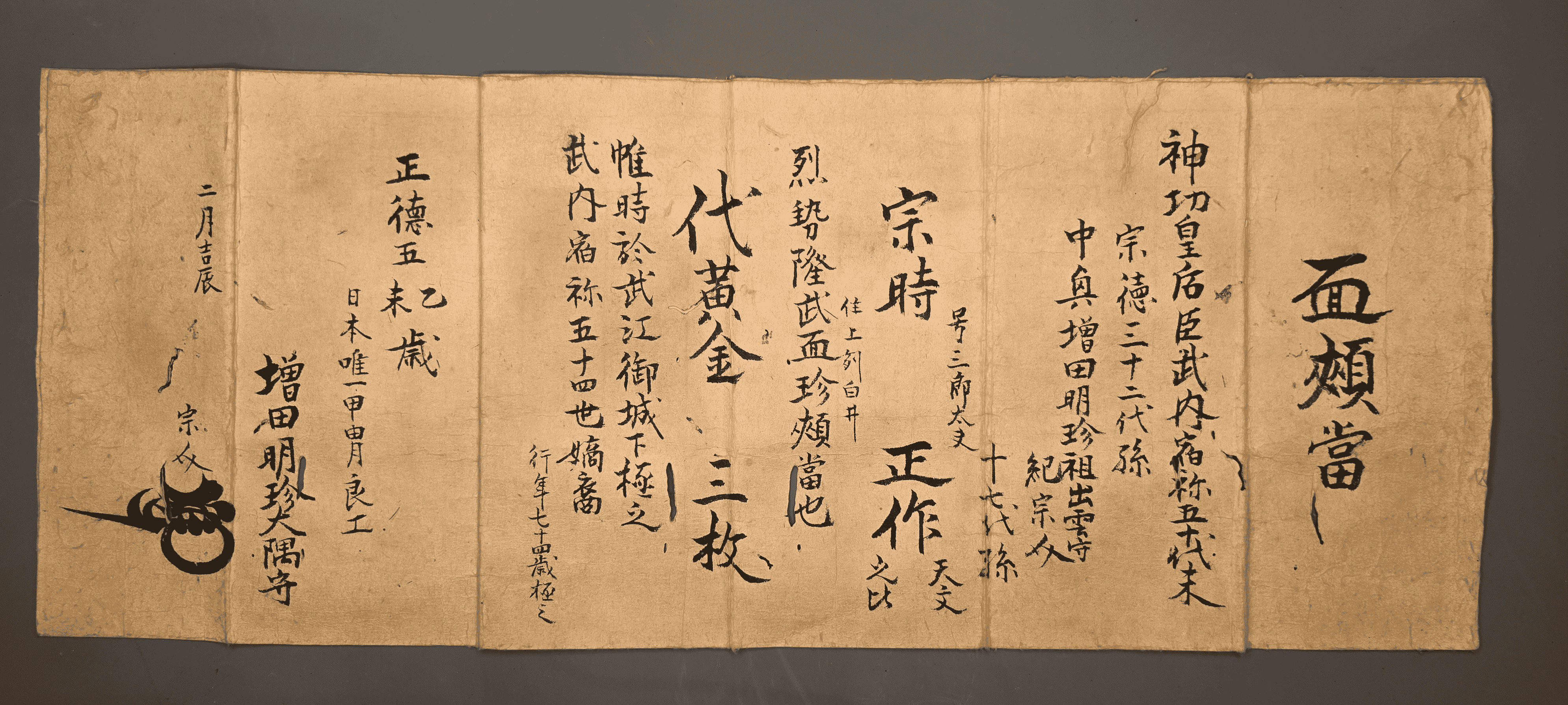
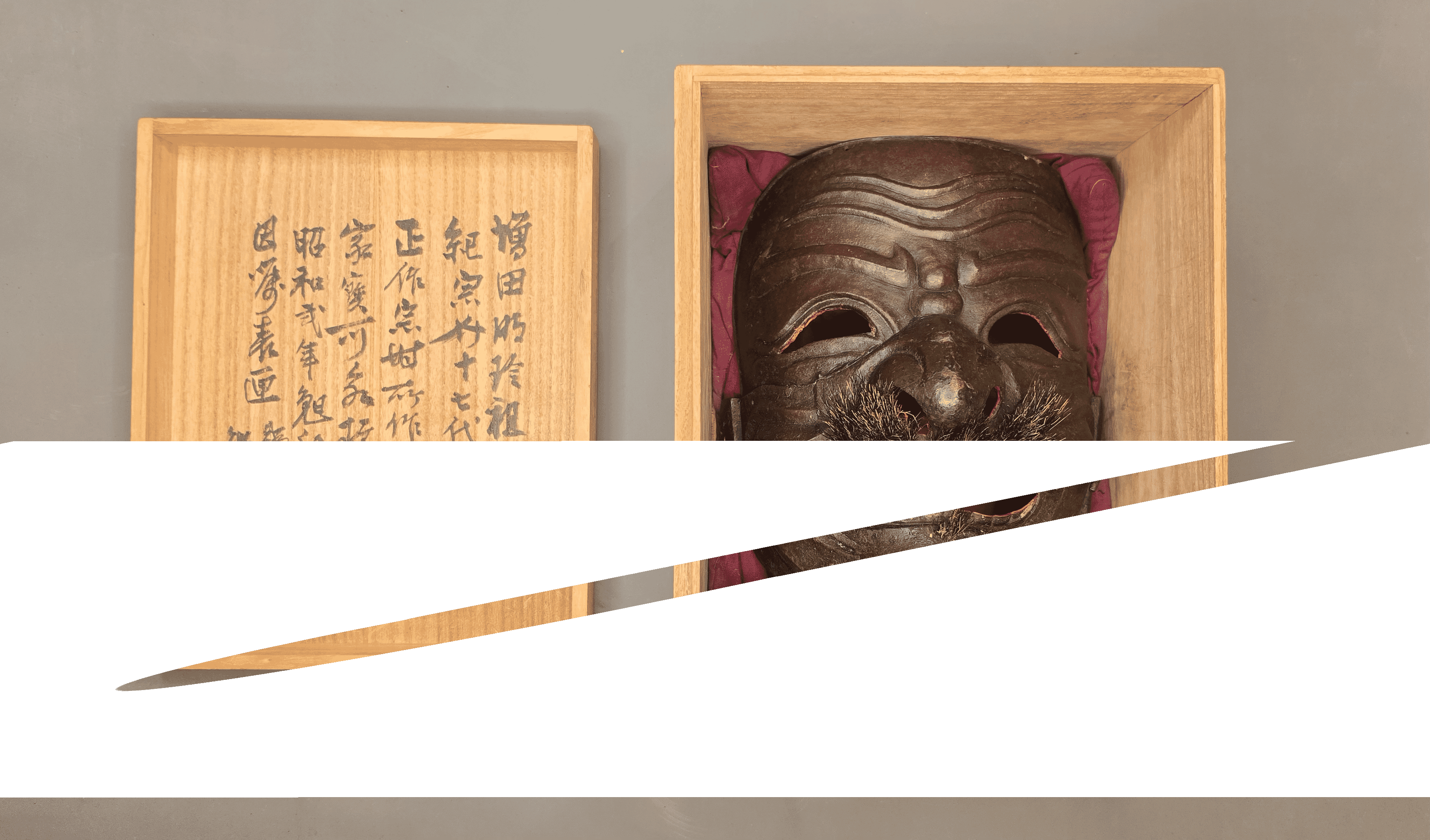
Kiwame fuda dated 1715 and inscribed storage box
From facial armour to iron sculpture
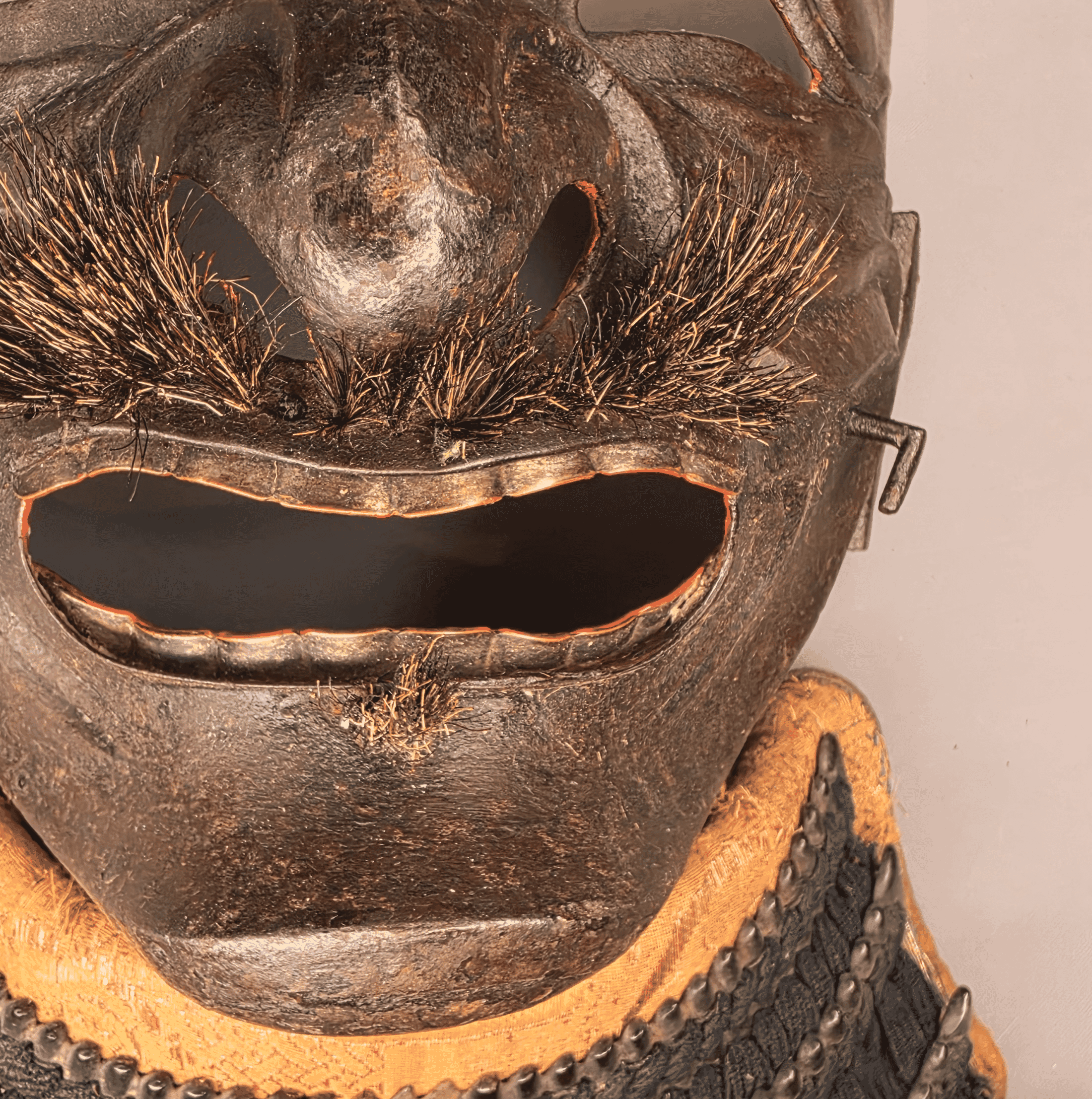
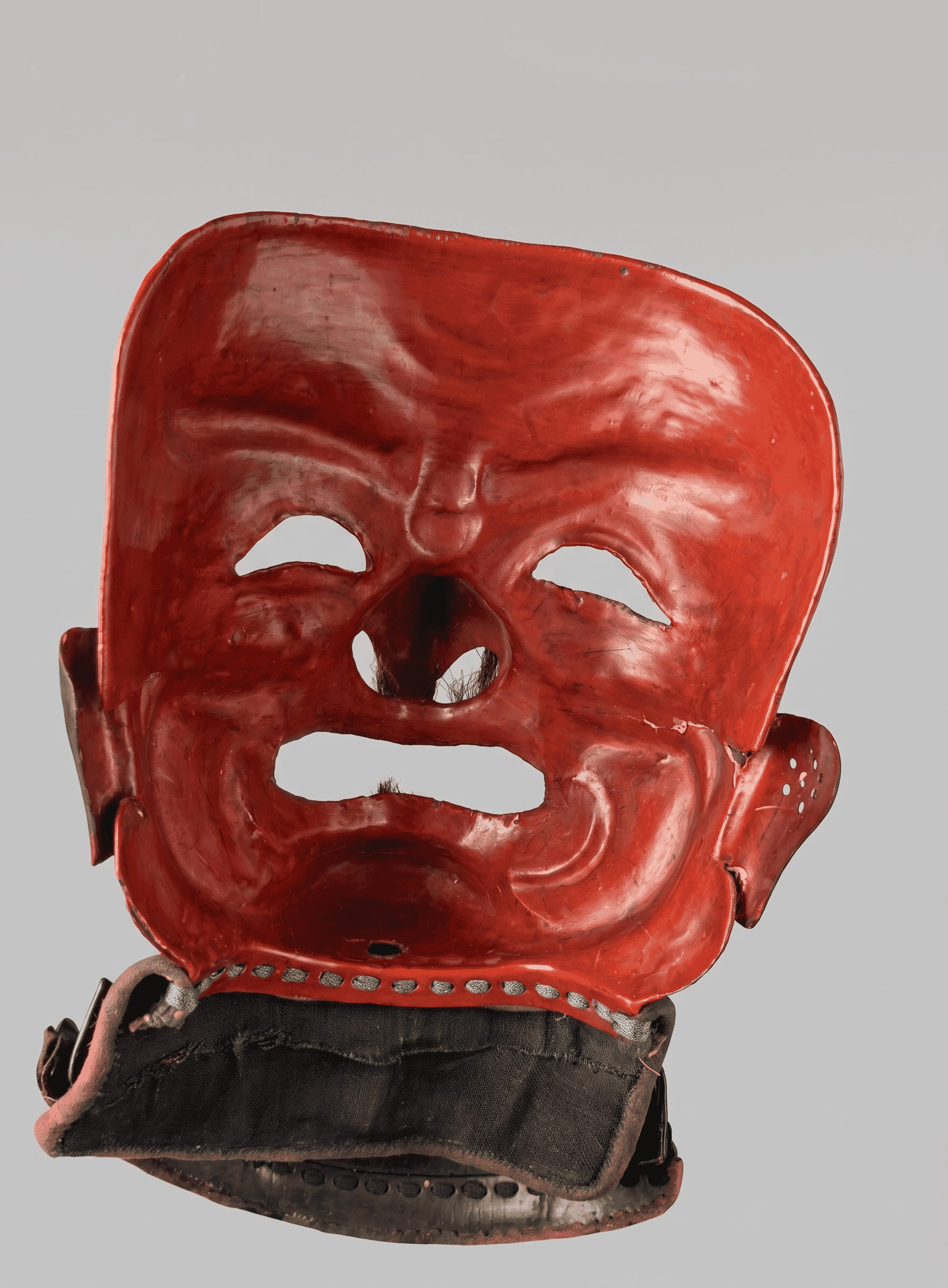
This imposing iron mask belongs to the rare full-face form now generally described as a sōmen. Its deeply modelled brow, pronounced nose, articulated mouth and applied moustache create a formidable expression while retaining the practical construction of armour intended to protect the entire face.
The surface is deliberately preserved in a dark russet finish. Beneath the mask, a multi-lame yodarekake protects the throat and is finished with dark blue lacing. The modelling is vigorous rather than decorative: the face has the weight, asymmetry and presence of a work made by an armourer who understood iron as a sculptural material.
The mask is accompanied by its old wooden storage box and an original authentication certificate. Together they preserve an unusually rich documentary history and make the piece particularly valuable for the study of early Japanese facial armour.
Details & documentation
View the gallery for detailed views of the object, certificate and storage box. Select any image to open the slideshow and move through the complete set.
A documented history spanning three centuries
The accompanying kiwame fuda was written in Shōtoku 5 (1715) by the Myōchin assessor Masuda Myōchin Ōsumi no Kami Ki no Munesuke, who recorded his age as seventy-four. Munesuke attributed the mask to the armourer Munetoki 宗時, also known as Saburō-dayū, working at Shirai in Kōzuke Province, and dated the work to the Tenbun period.
The terminology is itself significant. Although the object would today be classified as a sōmen, the certificate describes it as menpō-ate. In its historical context this need not be contradictory: the term could function more broadly for facial armour before modern collecting categories became fixed.
In 1927 the storage box was inscribed by Yamada Shikō 山田紫光, the Japanese painter, armour researcher and noted collector. His inscription repeats the Munetoki attribution and describes the mask as a work worthy of preservation, demonstrating that the mask, certificate and attribution had already been associated for generations.
Enquire about the Early Myōchin Sōmen
Please contact David for the price, condition report, additional photography or to arrange a private viewing. The product is identified automatically in the email subject.
Send an enquiry