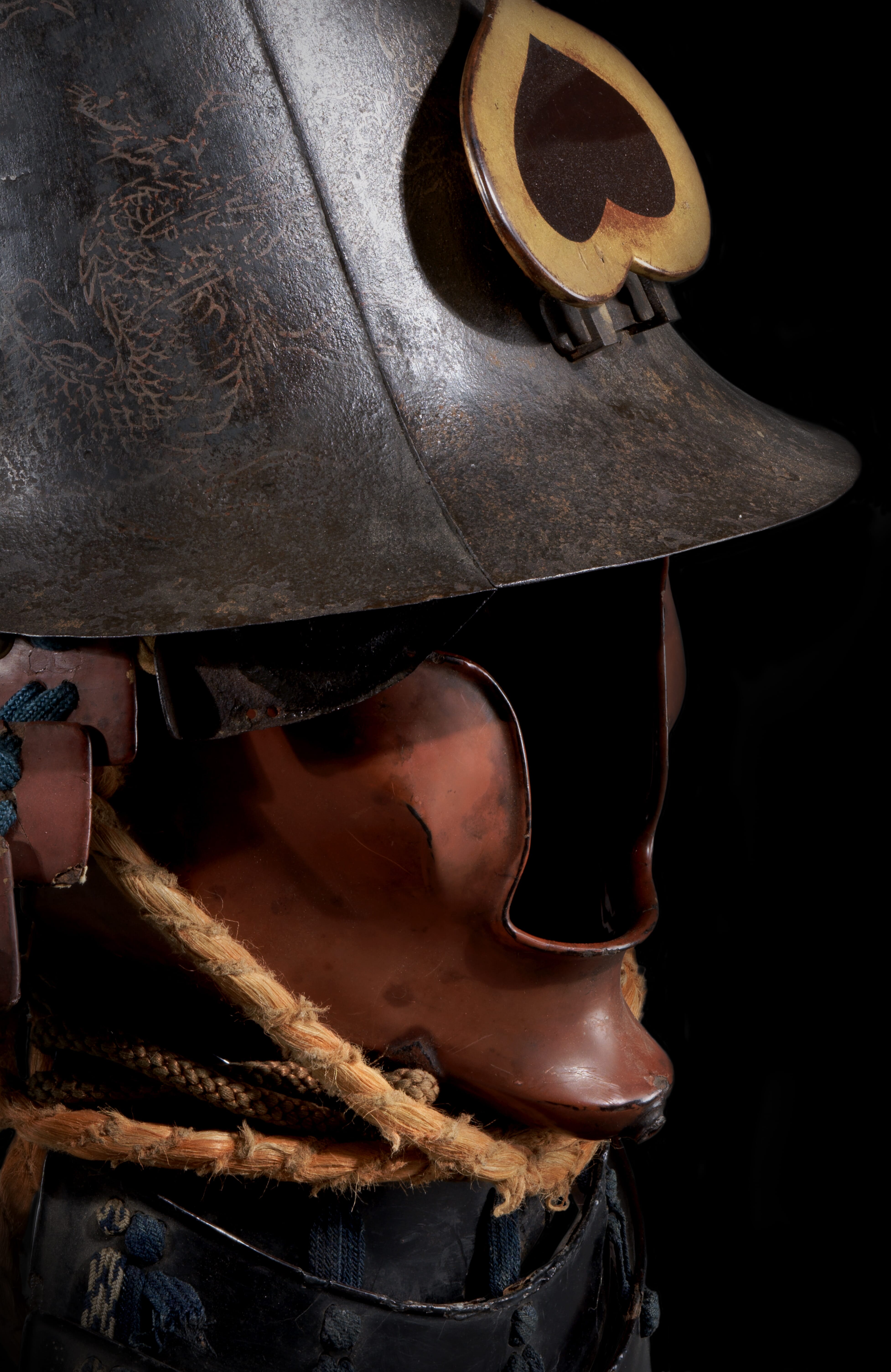
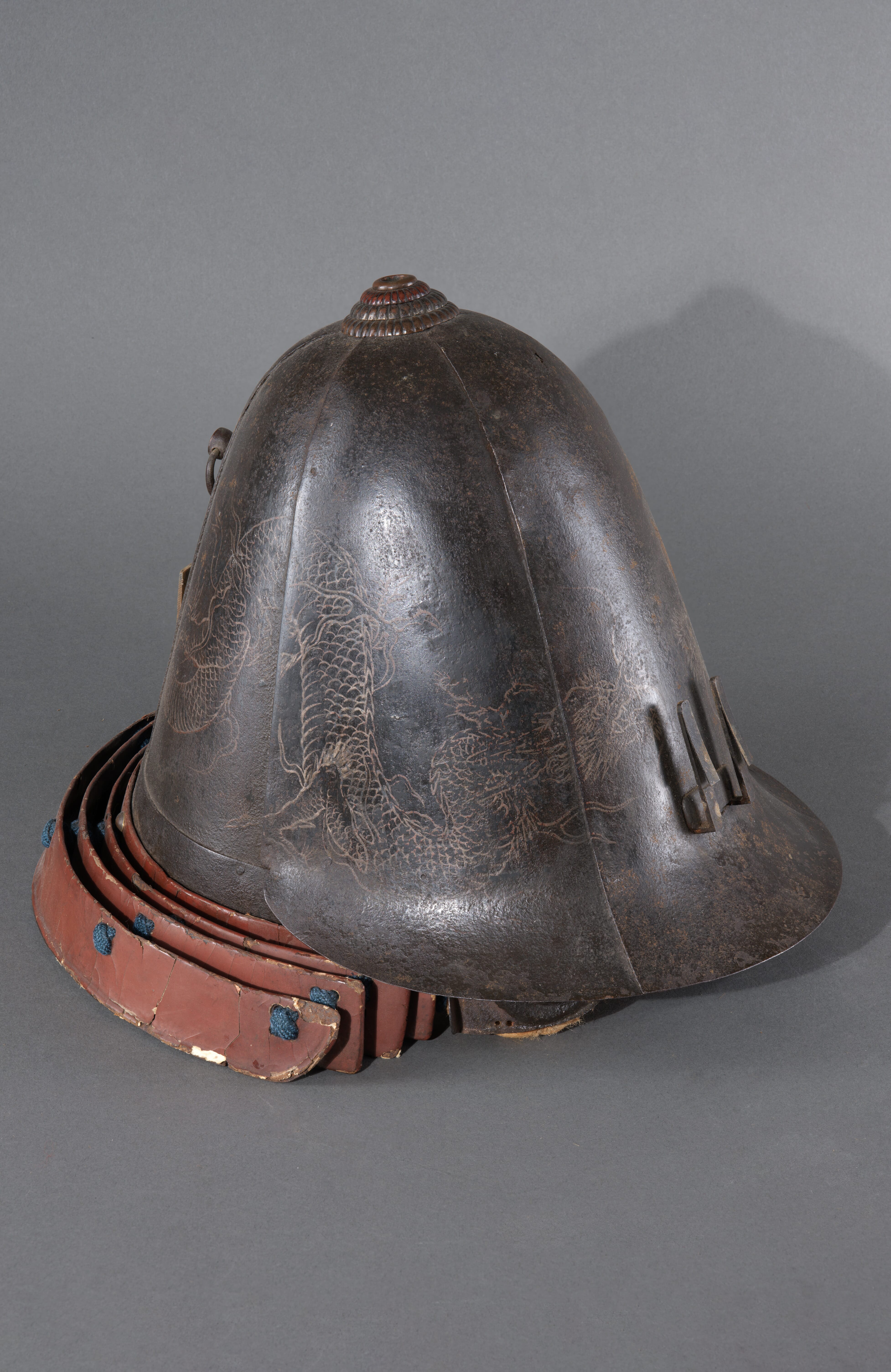
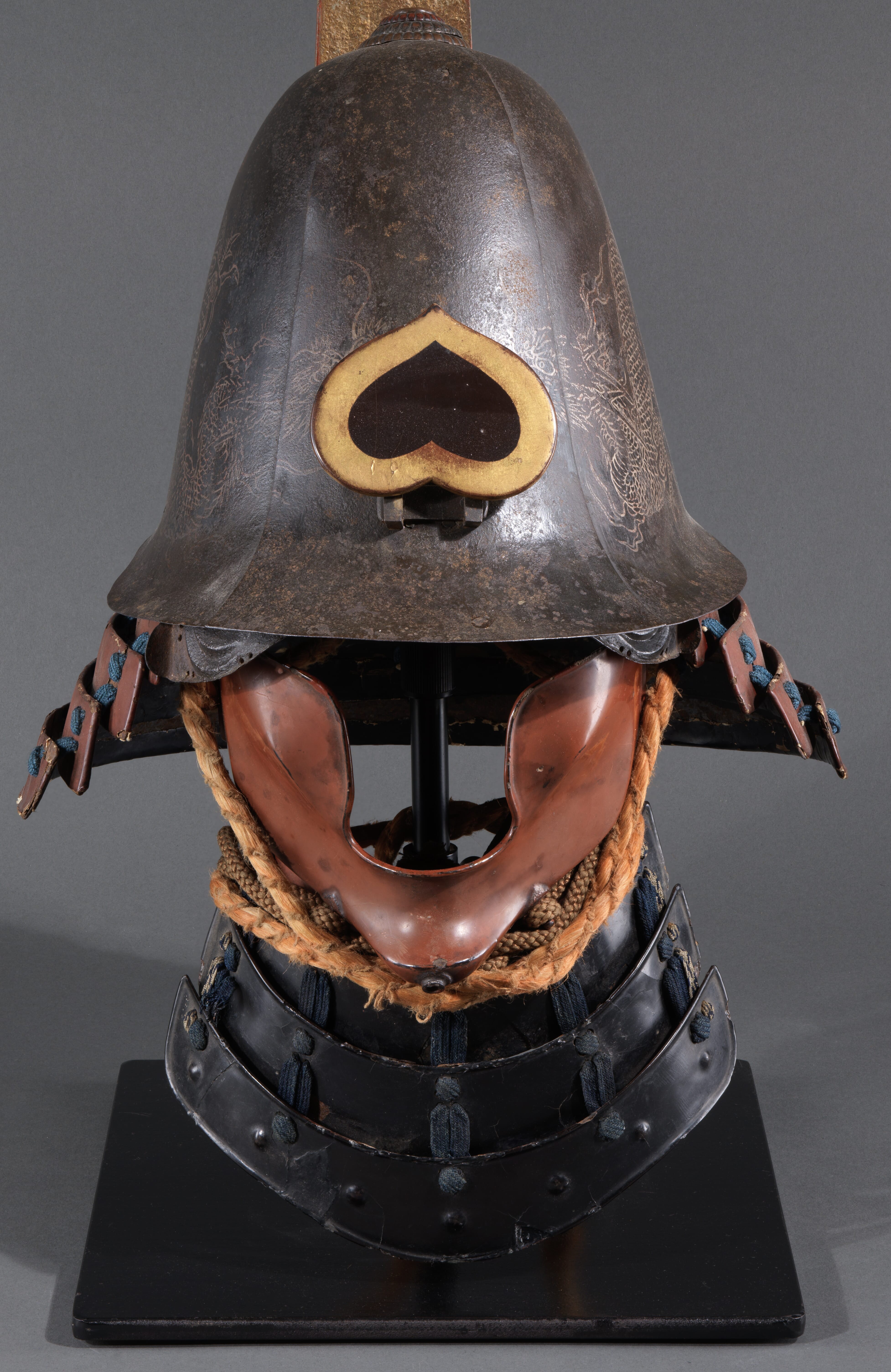
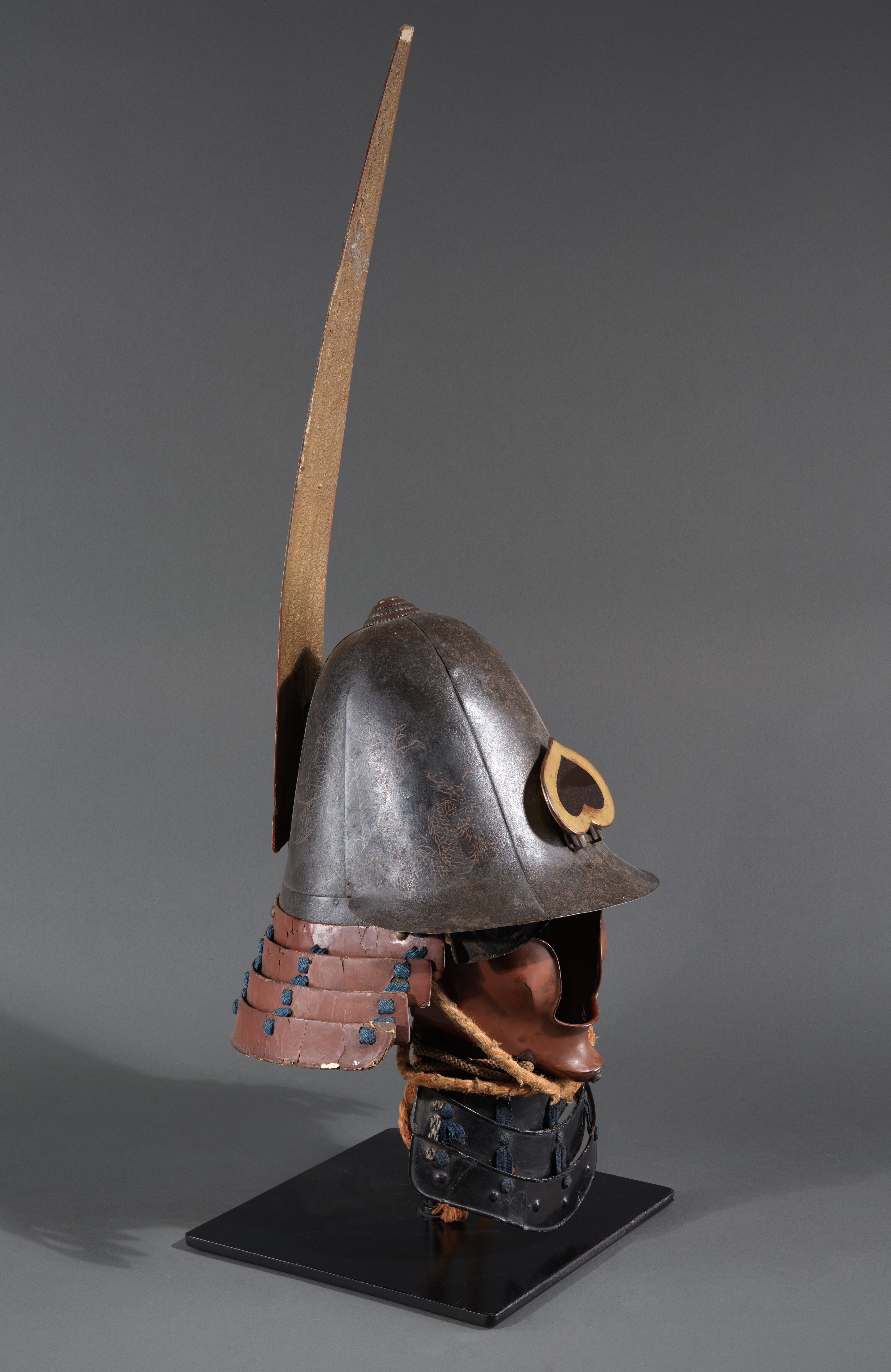
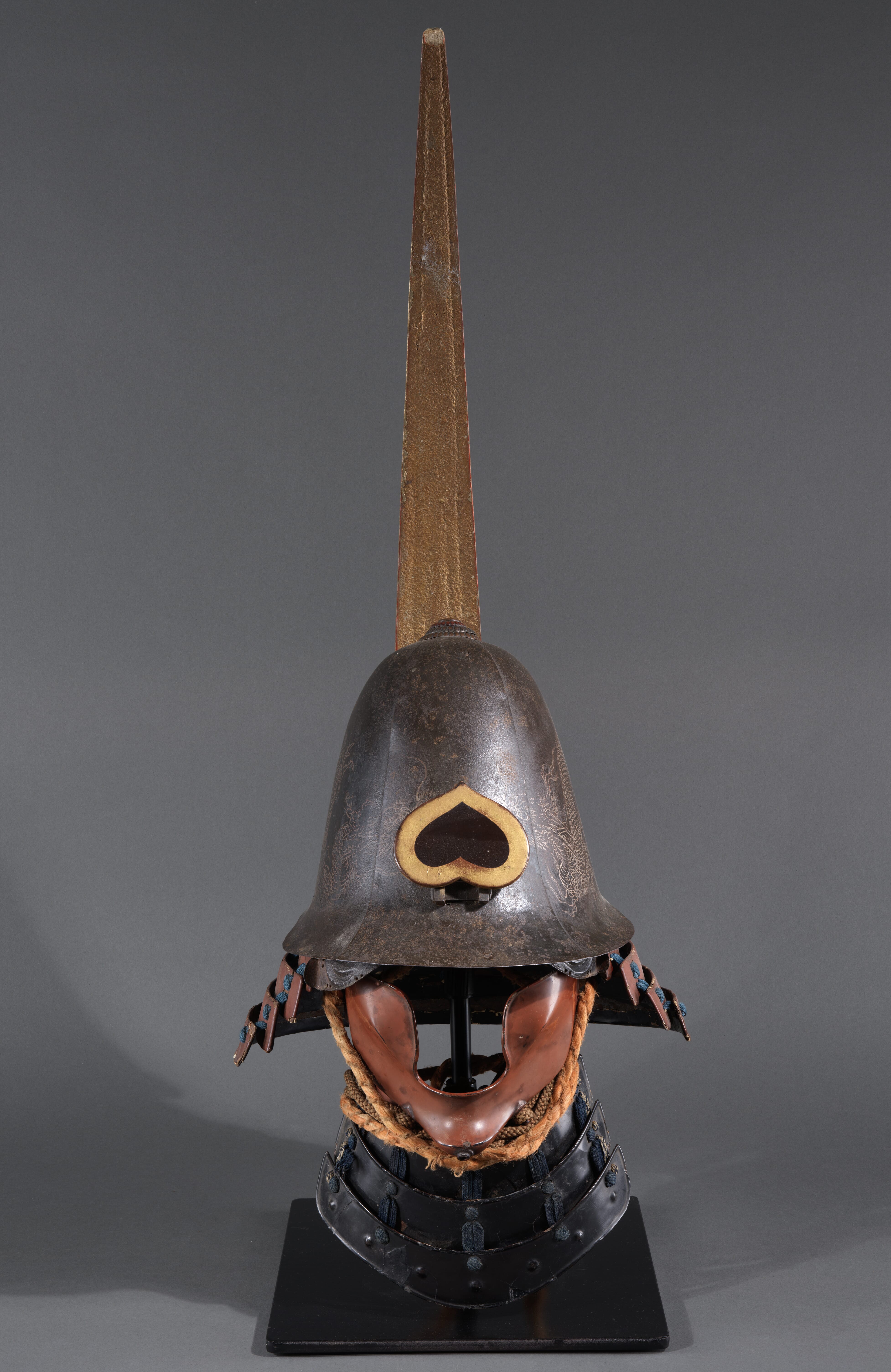
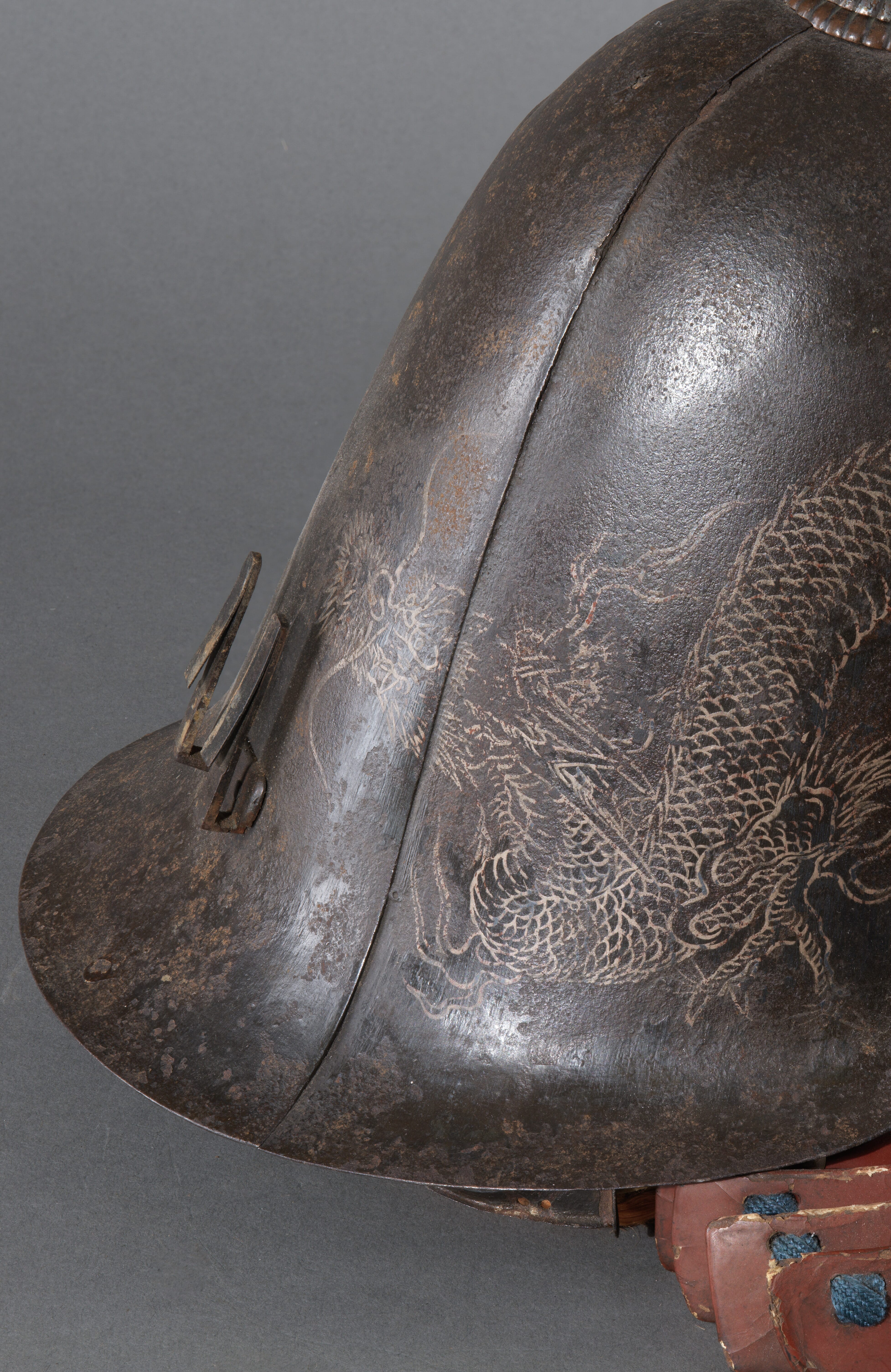
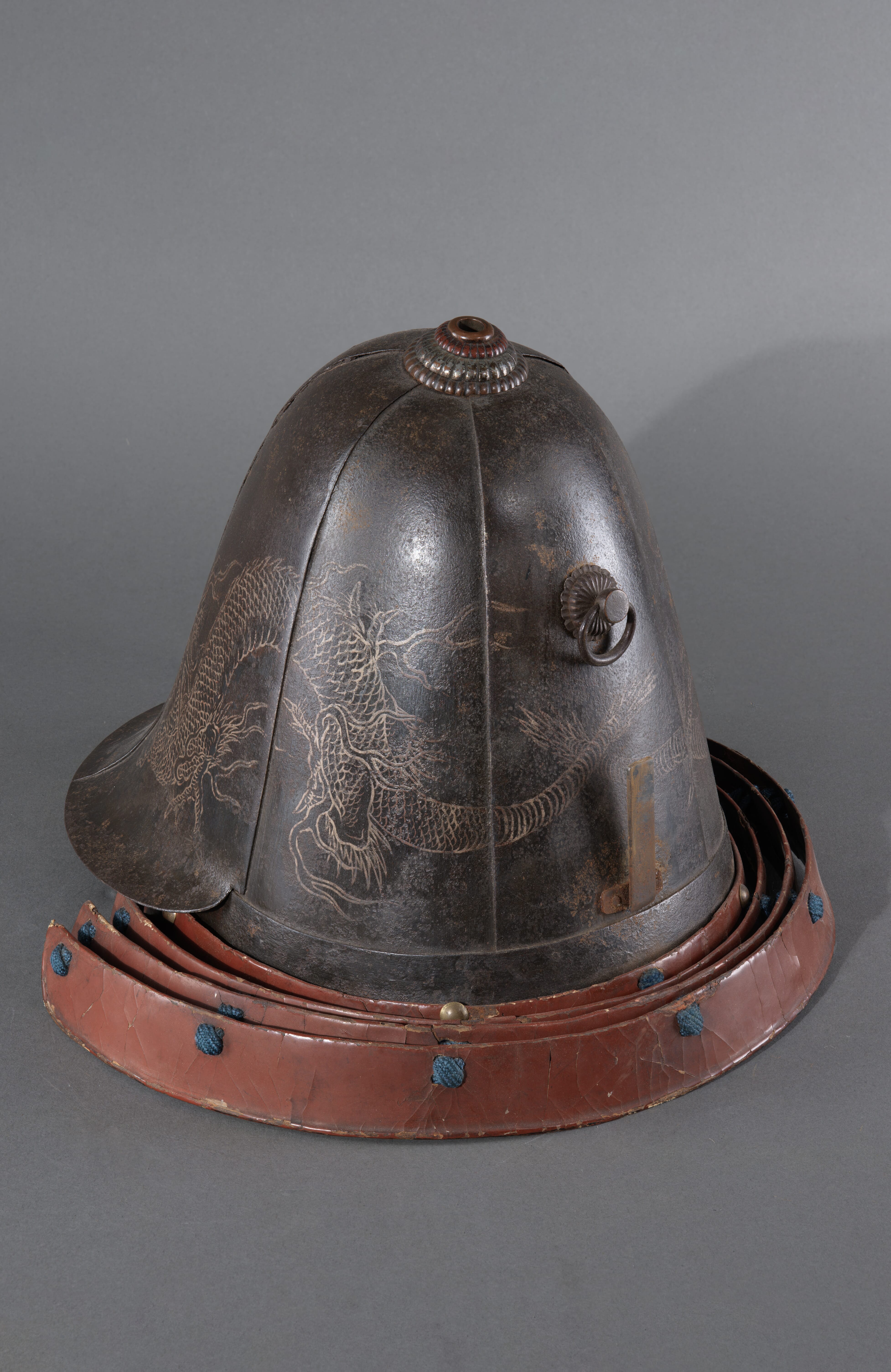
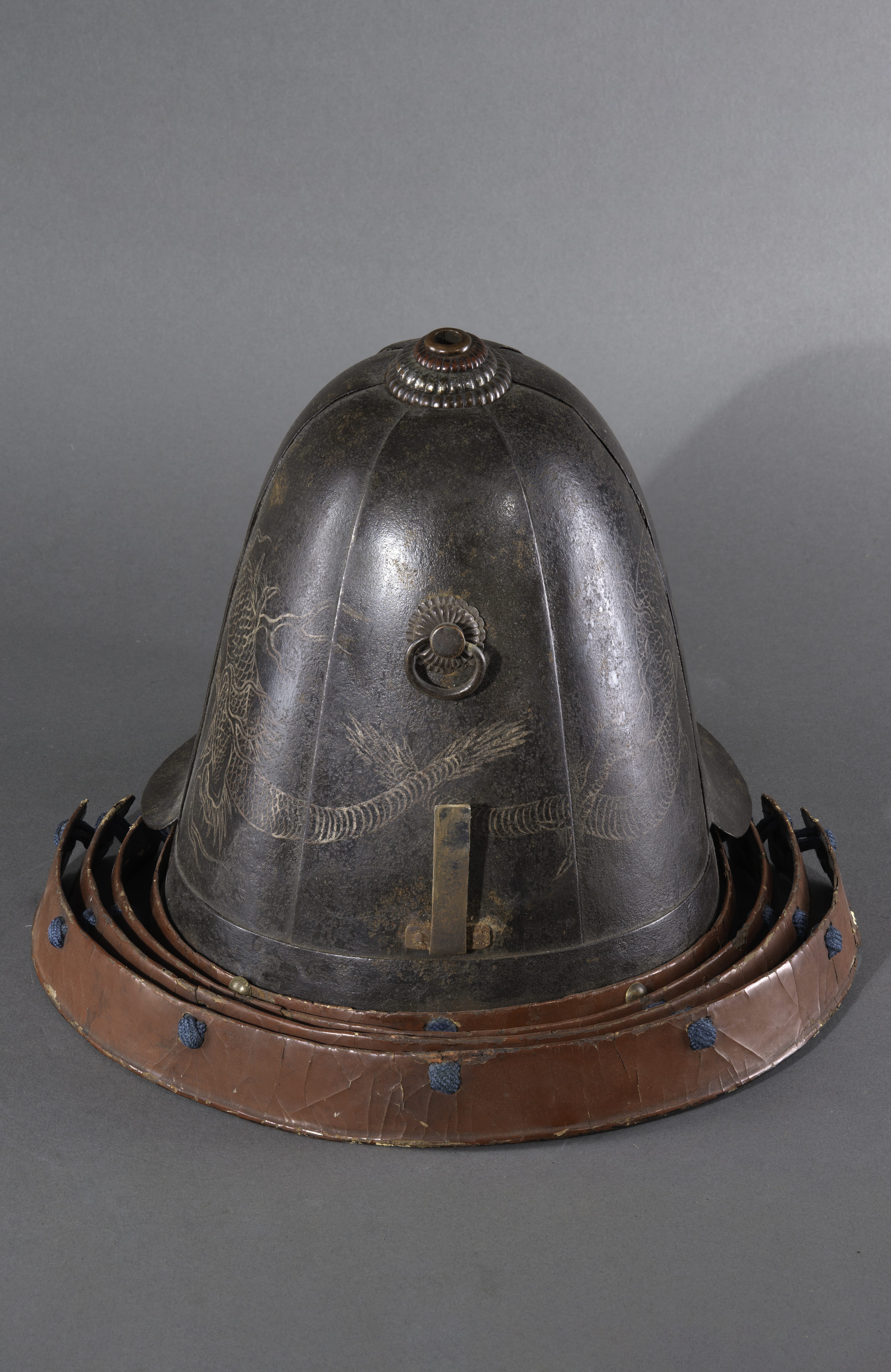
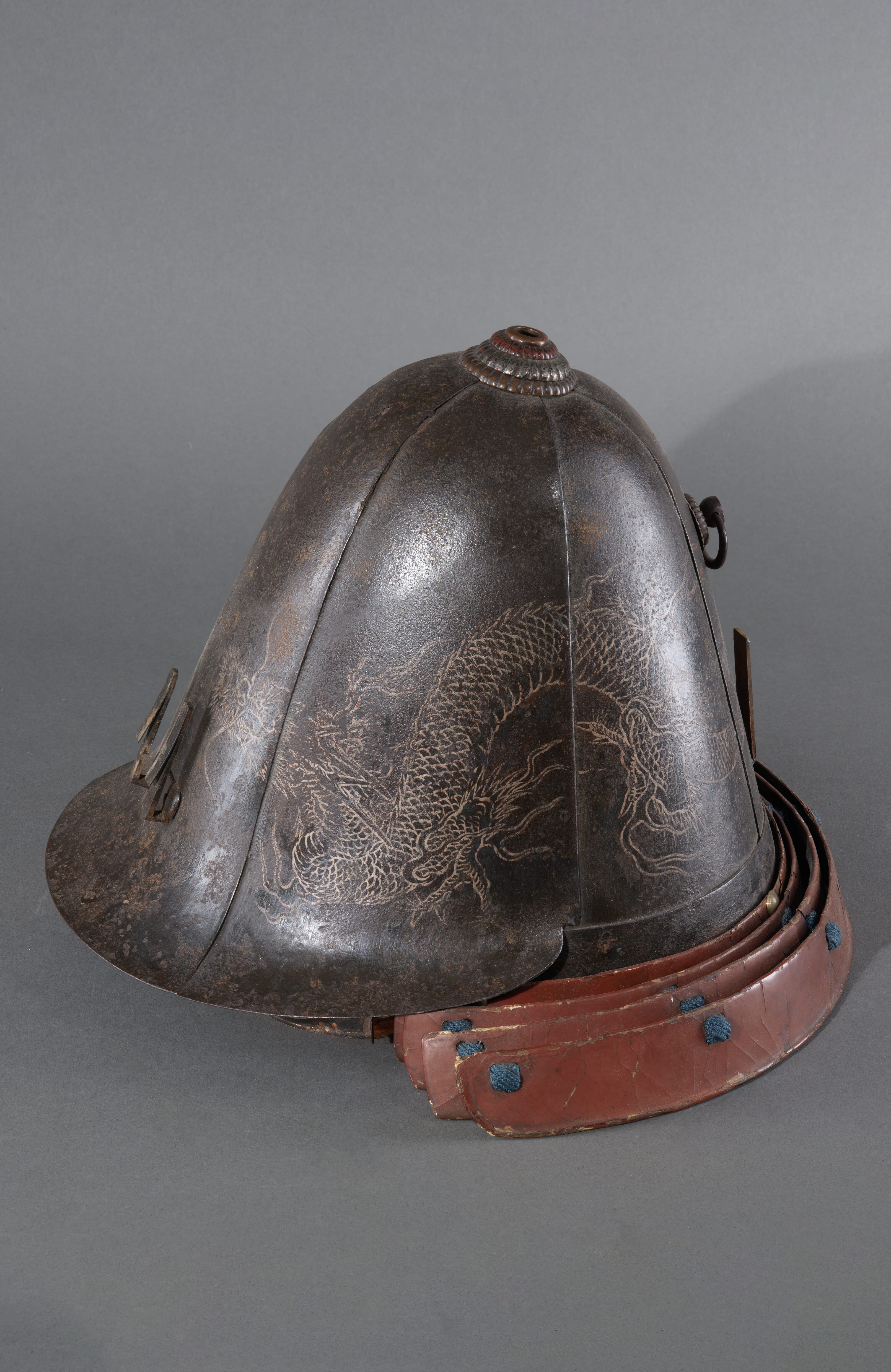
An exceptional late-sixteenth-century Japanese samurai helmet, combining an eight-plate russet-iron shii-nari bowl with twin gold-inlaid dragons and a bold Nanban-influenced silhouette.
£12,000
EX VAT
PERIOD Japan, late Sengoku–Azuchi-Momoyama period Late 16th century
CONSTRUCTION Eight-plate shii-nari kabuto Russet-iron bowl of Nanban-influenced form
DECORATION Twin gold hon-zōgan dragons Inome maedate and tall ushiro-date
COMPLETE SET Kabuto with red-lacquered hanpō Four-lame shikoro and three-lame tare
The work
Made to be seen
Nothing about this helmet suggests anonymity. Although the identity of its original owner is not recorded, no invented clan or battlefield attribution is required. Its late-sixteenth-century date places it within a military culture in which armour still served a practical purpose while also expressing the wearer’s status, identity and authority.
The provision for crests at both the front and rear would have created a distinctive outline from every viewpoint. Together with the ambition and expense evident in the commission, this indicates a samurai with the means to request something beyond ordinary battlefield equipment. It is an object conceived to protect its wearer, but also to make him immediately recognisable.
Condition and viewing The internal lining and hand-twisted hemp helmet cord remain preserved. The kabuto is presently displayed with a red-lacquered half-mask and purpose-made stand. A detailed condition report, dimensions, additional photographs and an in-person or video viewing can be arranged on request.
Details & construction
View the gallery for detailed studies of the complete armour and its individual components.
Catalogue note
Armour as sculpture
The artistic quality of this helmet begins with the form of the iron rather than the decoration applied to it. The tall shii-nari hachi, projecting visor and rear ushiro-date create a changing silhouette, while the two dragons in hon-zōgan follow the curvature of the bowl and draw the eye around its surface.
The dragons are especially interesting at the rear, where their tails remain open and meet the area of the rear tsunomoto. With the tatemono mounted, the composition continues upwards rather than simply ending on the bowl. The crest therefore becomes part of the overall design rather than something added independently to it.
Viewed in the round, the helmet has the qualities of sculpture. Iron, gold, surface and silhouette work together as a single form, demonstrating how a piece of practical Momoyama armour could also become an expression of samurai art.
Private enquiry
Enquire about this kabuto set
Please contact me for dimensions, condition information, additional photographs or to arrange a private viewing. Your enquiry will be identified automatically by the subject line.