
Samurai Museum Berlin
The story of the Samurai Museum Berlin is, for me, inseparable from one of the most demanding and rewarding conservation projects of my career.
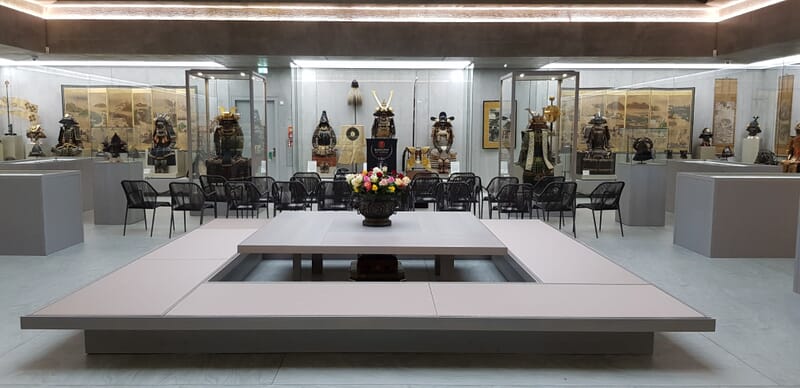
I first met Peter Janssen in Leeds at a Japanese armour symposium I had organised in collaboration with the Royal Armouries. The event brought together armour enthusiasts, collectors and specialists from across Europe and as far as the USA. Peter attended with a small group of fellow Europeans and, during those conversations, he spoke with quiet conviction about his ambition to open a museum dedicated to his then humble collection of Japanese arms and armour. Even then, it was clear this was not a vanity project, but a serious scholarly endeavour grounded in long term commitment.
The Commission
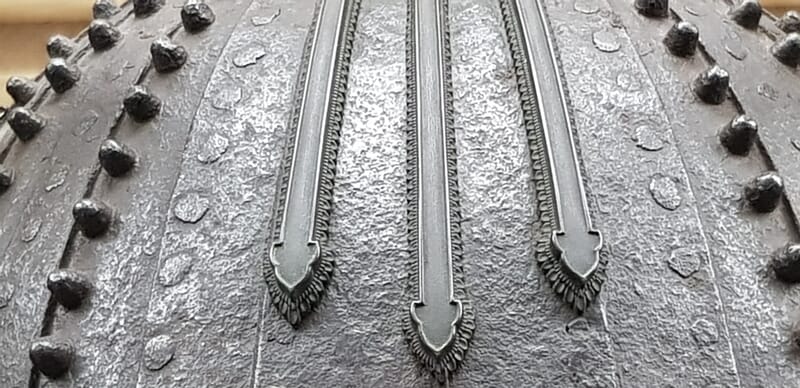
As the opening of the museum approached, then in its first phase incarnation, Peter approached me with a request. He asked whether I would undertake the restoration of what would become the museum’s centrepiece armour. The armour was associated with a lord of the Katō clan, a lineage with deep roots in the Momoyama and early Edo periods and closely tied to figures such as Katō Kiyomasa. The suit itself was visually powerful, austere and commanding, exactly as one would expect from a martial house of that standing.
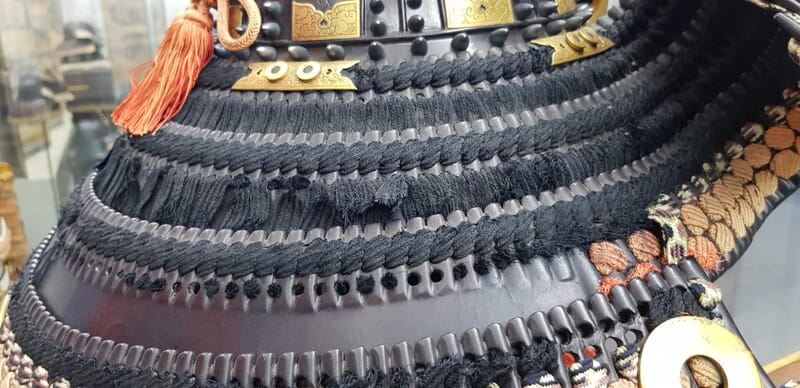
Unfortunately, the armour had succumbed to one of the most common and destructive problems encountered in historic Japanese armour. The odoshi lacing had deteriorated to the point of structural failure.
Black Odoshi and Material Vulnerability
The armour was originally laced in black odoshi. While visually striking, black dyed silk presents long term conservation challenges. Traditional black dyes often incorporated iron based compounds. These residues, combined with light exposure and environmental factors, accelerate oxidative degradation of silk fibres. It was for this reason that the Tokugawa authorities later discouraged and in some contexts prohibited extensive use of black lacing. The result, centuries later, is all too familiar to armour conservators. Silk that looks intact but fails under its own weight.
Inspection and Preparation
I travelled to Berlin to inspect the armour in person. The condition confirmed our concerns. The lacing was actively failing and the armour could not be safely displayed without intervention. Detailed measurements revealed that two braid widths were required, 10mm and 14mm, matching the original construction.
Back in the UK, I ordered raw black silk filaments directly from Japan. Using my own machinery, I produced the replacement odoshi to match the original dimensions and character as closely as possible. This approach allowed for full control over tension, density and finish, all critical factors when relacing a suit of this importance.
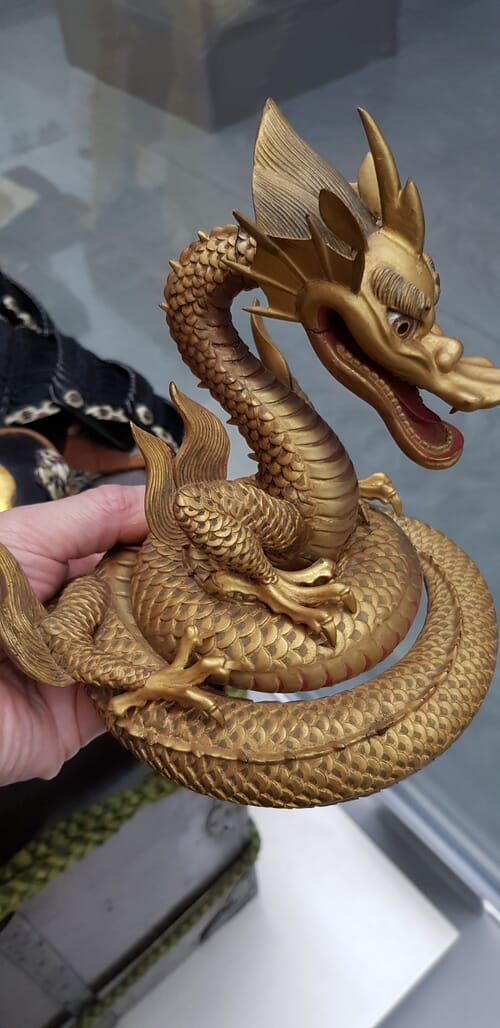
During my absence, the finely carved and gilded kashira-date was accidentally dropped by museum staff and broken into three pieces. It serves as a quiet reminder that even within museum environments, accidents do happen, and that skilled conservation support is essential when the unexpected occurs. Fortunately, the damage was fully stabilised. The element was carefully reassembled, losses filled, and the surface reintegrated to a degree where the intervention is now visually undetectable.
On Site Restoration Under Pressure
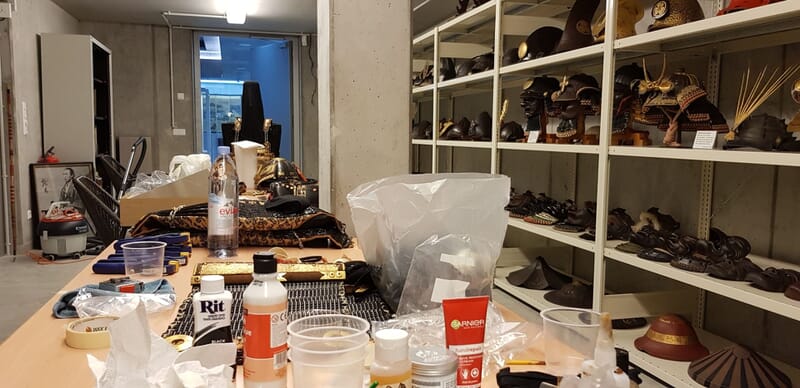
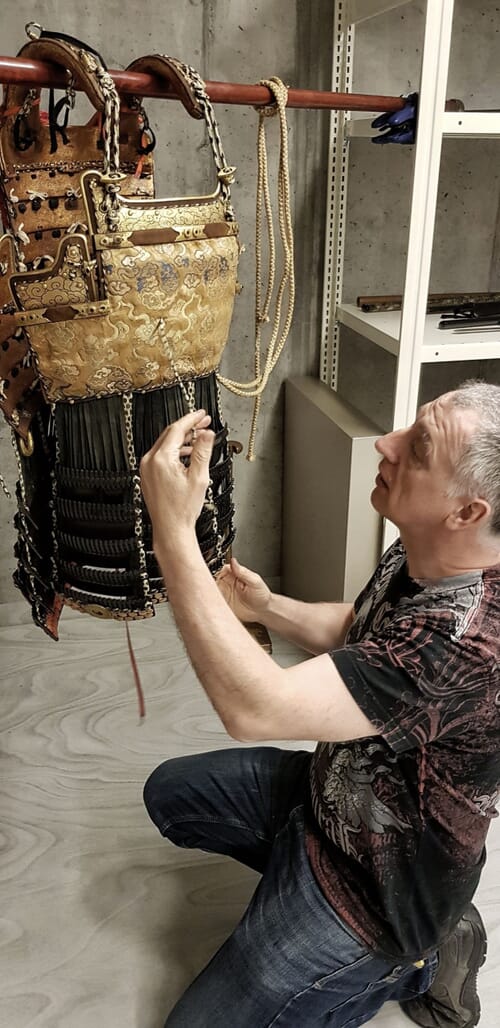
Time, however, was not on our side. With the opening gala looming, there was no opportunity to ship the armour to my studio. Instead, I returned to Berlin eight days before the opening and undertook the entire restoration on site.
Ordinarily, this type of work would be carried out using bespoke frames designed to support and suspend armour components during lacing. In Berlin, those tools were not available. Improvisation became essential. A ladder and a horizontal pole became my framework. It was far from ideal, but conservation often demands adaptability.
For eight consecutive days I worked from 8am through to 9pm. Slowly, methodically, the armour came back together. Against expectations, the work was completed one full day ahead of schedule.
The Final Assembly
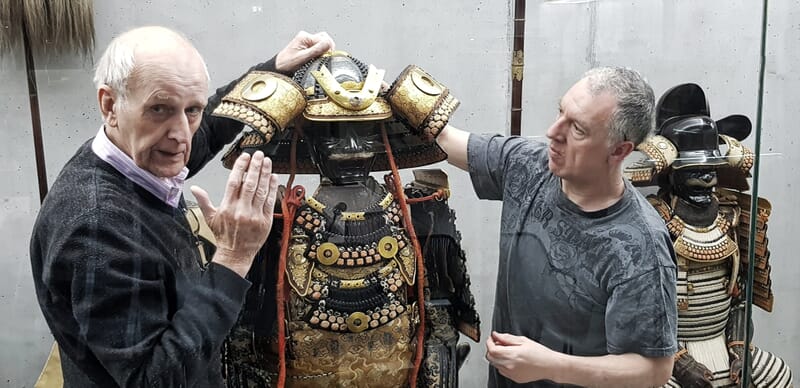
The sense of relief and pride at completion was immense, shared by Peter and by everyone involved. My mentor, Ian Bottomley (Curator Emeritus of Oriental Collections. Royal Armouries), flew out for the opening. His presence was invaluable. Not only did he assist in placing the armour back into its display case, but he also recalled the precise methods for tying the complex series of cords and bows at the rear of the suit. Knowledge like that, passed from one generation to the next, is as important as any physical intervention.
Beyond Restoration
I went on to undertake several further restorations for the museum before later shifting my focus back towards dealing. What remains with me most strongly is the atmosphere of openness during those early days. Scholars, enthusiasts and visitors were welcomed, questions were encouraged, and the collection was treated as a living educational resource rather than a static display.
A Museum of International Importance
Since those early days, the museum has relocated to the heart of Berlin and is now firmly established as one of the city’s cultural attractions. Outside Japan, there are very few collections of Japanese arms and armour that can be described as truly serious. Peter’s collection stands among the very highest.
The Samurai Art Museum Berlin is home to some of the finest armour and swords in the world. More importantly, it stands as a testament to Peter’s lifelong dedication to the subject and his determination to share that passion openly and responsibly. For anyone with an interest in samurai history, craftsmanship or material culture, it is not simply recommended. It is essential.